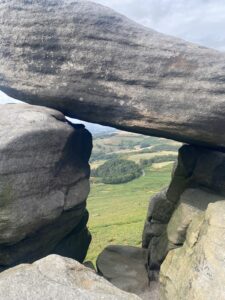
The Peak District is known for its stunning landscapes and dramatic scenery, but beneath the rolling hills lies another world altogether, one shaped by water, limestone, and time. The region’s caves and caverns are not only geological wonders but also windows into its rich mining heritage, folklore, and natural beauty.
If you’re ready for a bit of adventure, here are some of the most fascinating caves and how to find them:
Peak Cavern: The Devil’s Arse
📍 Castleton, Derbyshire
Peak Cavern is one of the most famous in the area, and certainly the most entertainingly named. Known locally as The Devil’s Arse due to the curious flatulent sounding noises that can echo through its chambers after heavy rain, it boasts the largest natural cave entrance in Britain.
Step inside and you’ll be walking in the footsteps of rope-makers and outlaws. This cavern was once home to Britain’s last troglodyte community and still hosts events and concerts thanks to its spectacular acoustics.
How to visit:
Follow signs into the village of Castleton, there’s paid parking and easy access to the cave via a short walk. Guided tours run regularly and last about an hour.
Treak Cliff Cavern
📍 Castleton, Derbyshire
Treak Cliff is famous for its deposits of Blue John, a rare, colourful form of fluorite found only in this area. Tours take you through narrow passageways filled with shimmering crystals, fascinating formations, and rich veins of this semi-precious stone.
Don’t miss: The underground fairy-tale world of stalactites and stalagmites – and the on-site shop with handcrafted Blue John jewellery.
Blue John Cavern
📍 Mam Tor Road, near Castleton
Another Blue John treasure, this working cavern offers a fascinating blend of natural beauty and mining history. It’s a little more off the beaten track and involves a bit of stair climbing, but the reward is a quiet, atmospheric visit to one of the UK’s most beautiful mineral caves.
Tip: Wear sturdy shoes and bring a warm layer, it stays cool underground year-round.
Speedwell Cavern
📍 Castleton, Derbyshire
For something truly memorable, Speedwell Cavern is accessed via an underground boat ride! You’ll descend a long staircase into a network of tunnels once mined for lead, and float quietly through narrow waterways into the eerie calm of the deep. The highlight? The Bottomless Pit, a deep, dark chasm filled with water that seems to vanish into infinity.
How to visit: Located just outside Castleton, with regular guided boat tours throughout the day. Combine it with a visit to nearby Winnats Pass for breathtaking views.
Poole’s Cavern
📍 Buxton, Derbyshire
Heading west from Castleton, you’ll find Poole’s Cavern, a spectacular limestone cave system on the edge of Buxton. Named after an infamous 15th-century outlaw who supposedly used the cave as a hideout, it’s now a family-friendly attraction with well-lit paths, striking stalagmites, and even an accessible route.
After your tour: Take a walk up to Solomon’s Temple, a Victorian hilltop folly with panoramic views across the Peak District.
Planning Your Cave Adventure
- What to bring: Comfortable shoes, a warm jacket, and a sense of adventure!
- Best time to go: Caves are open year-round and make a great rainy day activity.
- Where to stay: Our cottages at Top Riley are just a short drive from Castleton and Buxton, the perfect base to explore above and below ground.
So whether you’re intrigued by the myths of the Devil’s Arse, drawn to rare Blue John stone, or simply want to step into the cool hush of an ancient cavern, the caves of the Peak District promise a truly unique adventure.
Just don’t forget your torch… 🔦😉